
How we investigate
We start with what people experience. Then we look at what is actually happening inside.
A problem can look obvious from inside a business. Fewer customers might look like a marketing problem. People leaving might look like a recruitment problem. Volunteers disappearing might look like a commitment problem.
Sometimes that first explanation is right. Sometimes it is not.
Our job is to find out.

We start from the outside
Before looking at what the business believes is happening, we look at what somebody else actually encounters.
That might mean what a customer sees before buying, what an applicant experiences before joining, or what happens to a volunteer after they first show interest.
We look for the points where something becomes unclear, difficult, inconsistent or simply stops making sense.
Then we follow those clues inside.
What happens next
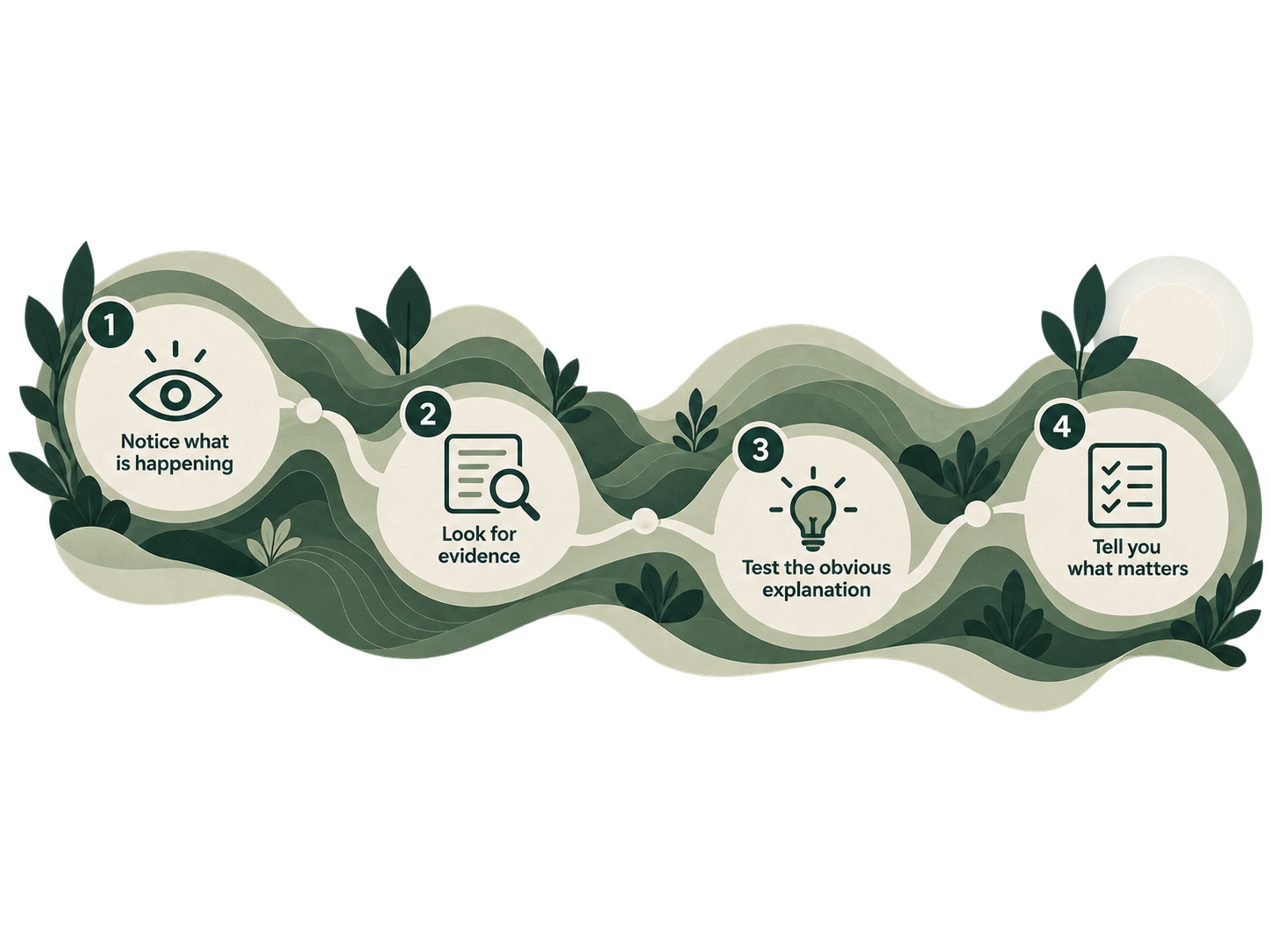
1. We notice what is happening
We start with the problem you can see.
Where are people hesitating, disappearing, getting frustrated or behaving differently from what you expected?
2. We look for evidence
Depending on the work, that could mean looking at communications, systems, processes, analytics, customer or people touchpoints, and what actually happens day to day.
3. We test the obvious explanation
We do not assume the first answer is the right one.
We compare what we see from outside with what is happening inside, look for alternative explanations, and see which ones the evidence actually supports.
4. We tell you what matters
Where the evidence is strong, we say so. Where something is uncertain or evidence is missing, we say that too.
You leave knowing what deserves attention first and what your sensible next moves are.
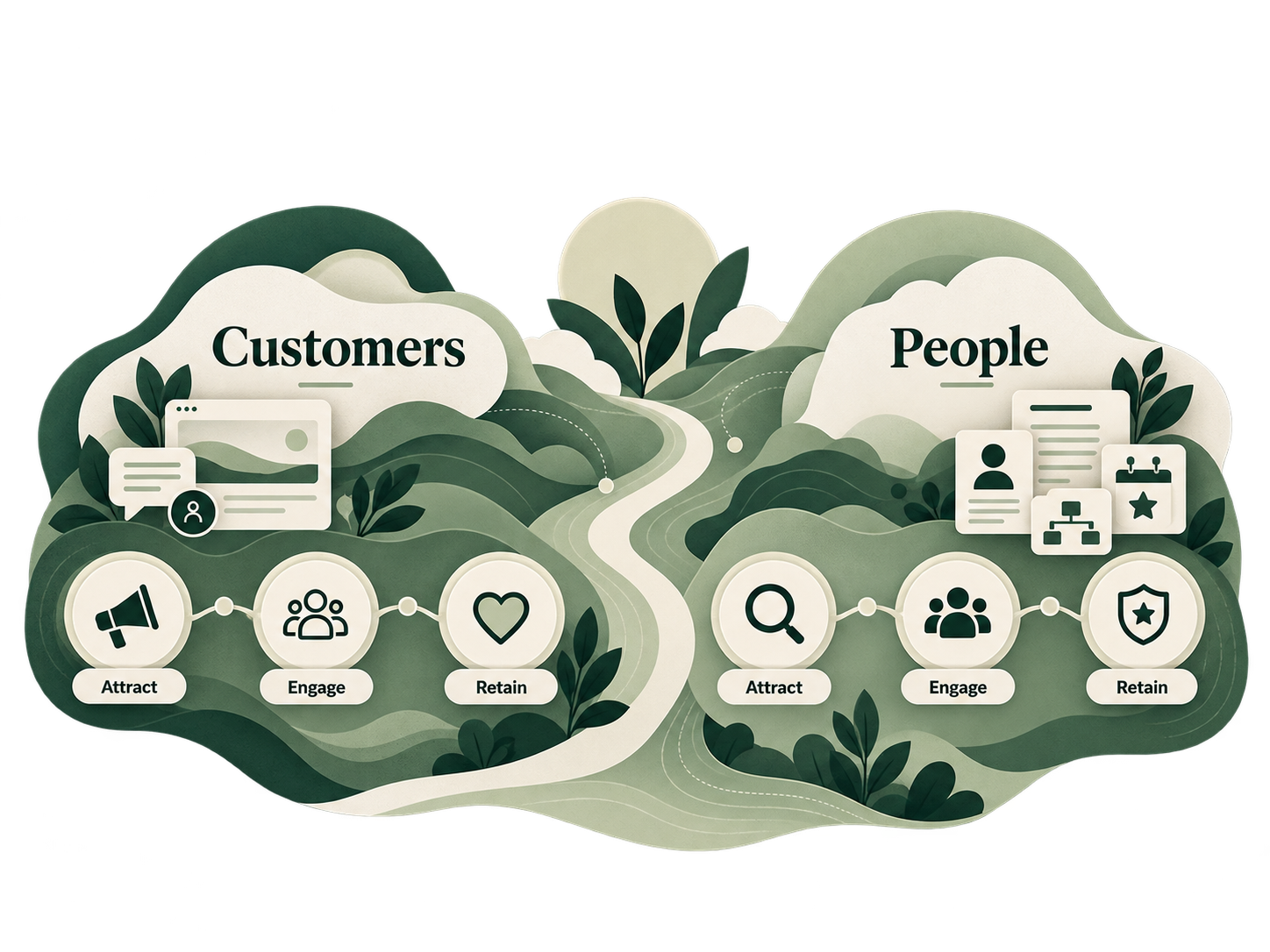
Customers
Attract
Can the right customers find you, understand you and choose you?
Engage
What happens when interest becomes an enquiry, purchase, visit or experience?
Retain
What makes customers return, drift away, recommend you or disappear?
People
Attract
Can the right people find you, understand the opportunity and choose it?
Engage
What happens when interest becomes an application, joining, work or participation?
Retain
What makes people stay, contribute, disengage, leave or recommend you?
We use this as a map, not a checklist.
We only investigate the parts that matter to the problem in front of us.
We do not need the answer to become more work
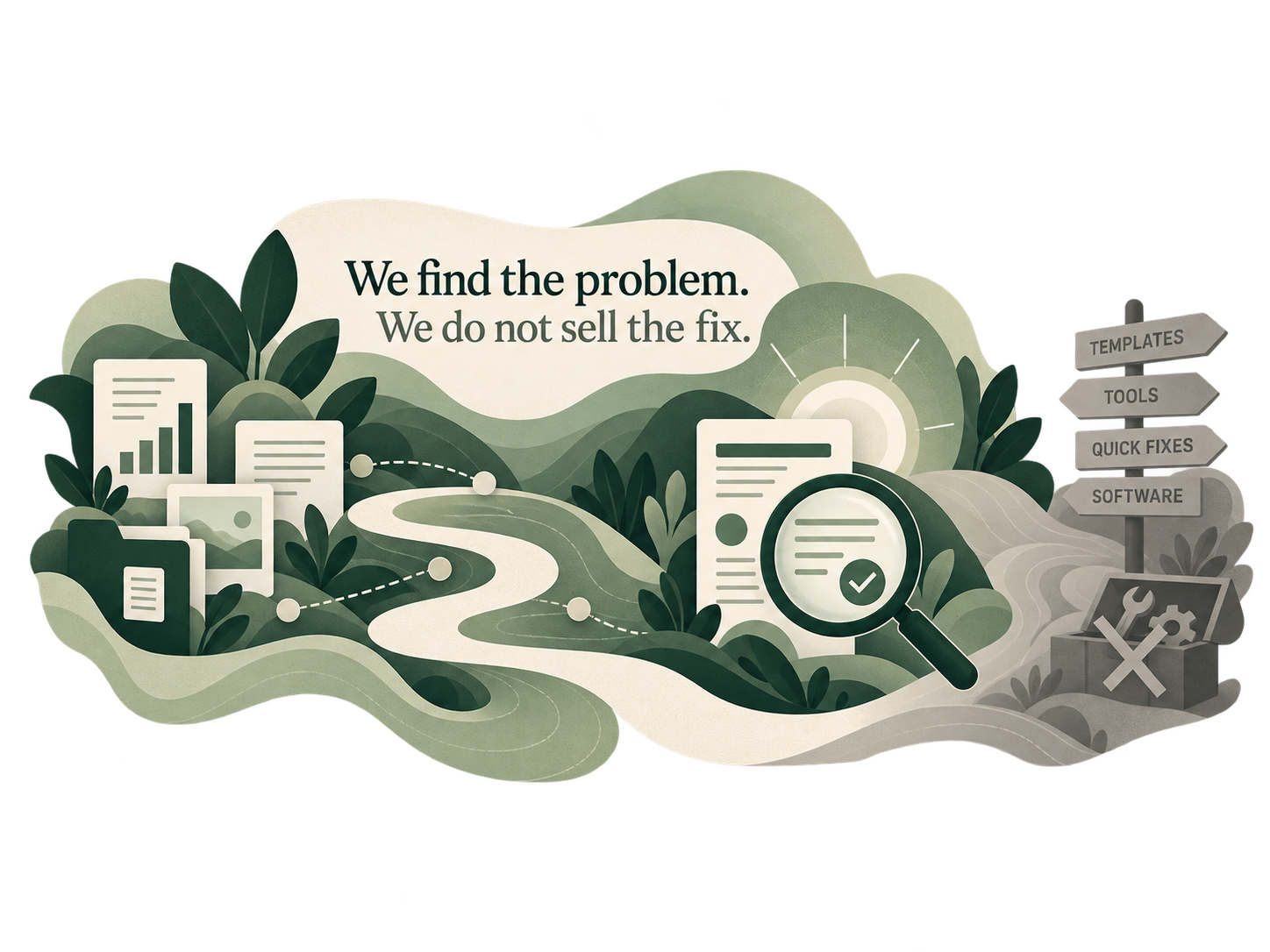
We are paid to understand the problem, not to sell you the solution afterwards.
We do not need your answer to become a website project, recruitment campaign, new system or long consultancy engagement.
If the evidence supports what you already suspected, we will say so.
If it points somewhere else, we will say that instead.
If the evidence is not strong enough to support a confident conclusion, we will make that clear too.
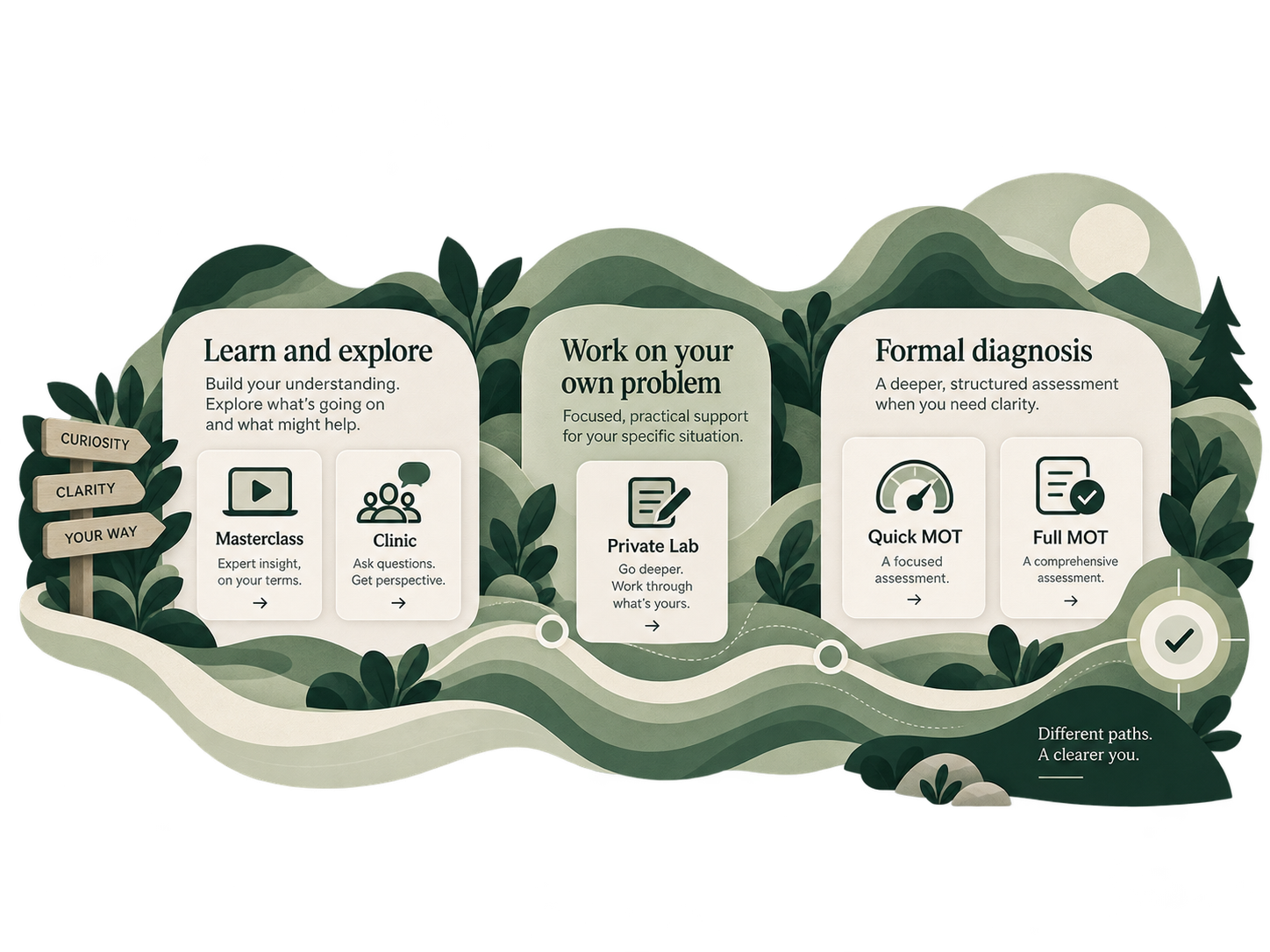
Not every way of working is a diagnosis
Start with what you are noticing
You do not need to know where the problem sits.
You do not need to arrive with a diagnosis.
Tell us what you are seeing, noticing or worrying about.
We can start there.